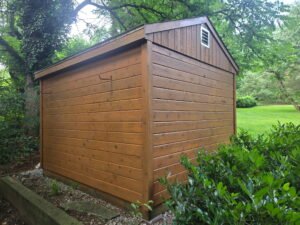
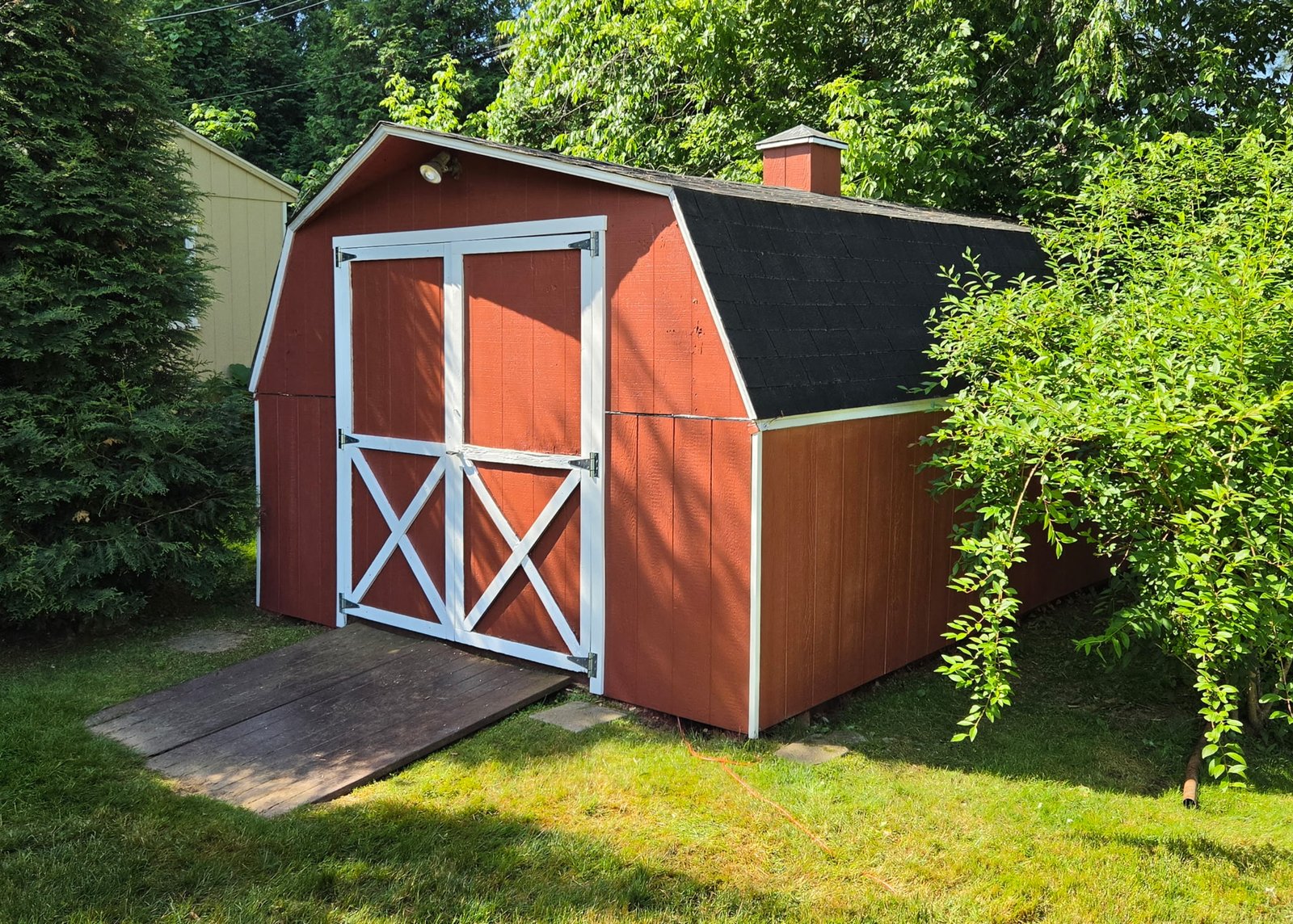
A shed that’s started to lean has a way of looking worse every time you glance at it. Sometimes it’s purely cosmetic and easy to correct. Sometimes it’s the structure quietly telling you the foundation has moved. The trick is knowing which one you’re dealing with, because they get fixed very differently.
Here’s what causes a shed to tilt, and where the line sits between a fix you can manage and one worth calling in.
What makes a shed lean
A shed stays square because its foundation stays put and its frame stays connected. A lean means one of those two things has changed. The usual reasons:
The foundation shifted. This is the most common cause. Sheds set on skids, blocks, or a gravel pad can move when the ground beneath them does. Soil settles, water erodes it, frost heaves it up in winter and drops it in spring. Over a few cycles the shed is no longer sitting level, and the whole structure tips to follow.
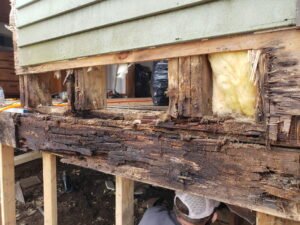
Rot at the base. If the bottom plate, skids, or corner posts have rotted on one side, that corner drops. The lean is the frame sagging toward its weakest point.
Racking. This is when the shed leans as a parallelogram, like a box pushed sideways. It happens when the wall framing loses its rigidity, often because the sheathing has loosened or the corner connections have failed. Wind and repeated stress make it worse over time.
Poor original construction. Some sheds were never properly anchored or squared to begin with, and they’ve simply been losing the argument with gravity since day one.
What you can probably handle yourself
If the shed is structurally sound and the lean came from the foundation settling slightly, you may be able to re-level it. Jacking up the low corner, adding or resetting blocks or gravel underneath, and getting it back to level is a real DIY project for someone with the right tools and some patience. Reinforcing loose wall connections or adding bracing to correct minor racking is also doable if the framing itself is healthy.
When to call an expert
Make the call when:
- The shed has rotted framing or posts at the base, so re-leveling alone won’t hold.
- The lean is significant, the structure is large, or the shed is racking badly enough that the doors no longer line up.
- The foundation issue keeps coming back after you’ve leveled it, which usually means a drainage or soil problem underneath.
- You’d need to jack up a heavy structure to fix it, which is genuinely dangerous to attempt without the right equipment.
- You’re seeing the lean alongside other problems like a sagging roof or soft floor, which suggests the whole structure is involved.
The reason to bring someone in here is mostly about diagnosis and safety. Re-leveling a shed that’s leaning because of rot just buys you a few months before it tilts again. Lifting a structure that weighs more than you think, on jacks, is how people get hurt. A professional can tell you whether you’re correcting a foundation, replacing rotted framing, or whether the shed has reached the point where a rebuild costs less than chasing repairs.
The honest takeaway
A small, recent lean from minor settling is often a fixable afternoon. A lean that’s paired with rot, racking, or a foundation that won’t stay put is a different conversation, and the worst move is to keep re-leveling it without dealing with the cause. If your shed is tilting and you can’t tell why, getting eyes on the base and the framing is the step that tells you whether you’re looking at a tune-up or a teardown.