You step into the shed, the floor gives a little near the door, and you make a mental note to deal with it later. That soft spot is worth more attention than it gets, because the floor is the one part of a shed that takes water, weight, and time all at once. When it starts to go, it usually tells you something about the whole structure.
Here’s how to read what’s happening and figure out whether it’s a board you can swap or a sign of something bigger.
Why shed floors fail
A shed floor is typically plywood or OSB sitting on a frame of joists, which rests on a foundation of some kind: skids, blocks, a gravel pad, or a slab. Floors fail from the bottom up, and the cause is almost always moisture.
Ground contact and trapped moisture. If the shed sits low, drains poorly, or has skids resting right on damp soil, the underside of the floor stays wet. Wood that never gets to dry out rots, and the rot starts where you can’t see it.
A leak from above. A roof or wall leak runs down and pools on the floor. The top surface looks fine for a while, but water finds the seams and soaks the edges of the panels.
No air underneath. Sheds set flat on the ground with no gap for airflow trap humidity against the floor. Even without an obvious leak, that constant dampness breaks the wood down over a few seasons.
Pests. Carpenter ants and termites are drawn to wood that’s already damp and softening. They don’t usually start the problem, but they speed it up considerably.
What you can probably handle yourself
If you’ve got one isolated soft spot, the joists underneath are still solid and dry, and you can trace the cause to something fixable, this can be a manageable repair. Cutting out a section of floor panel and replacing it, then addressing whatever let the water in, is within reach for someone comfortable with basic carpentry. Improving drainage around the shed or adding a vapor barrier underneath can stop a minor problem from coming back.
When to call an expert
Bring in a pro when:
- More than one area is soft, or the soft area is spreading.
- The floor flexes or feels bouncy across a wide section, which points to failing joists, not just the surface panel.
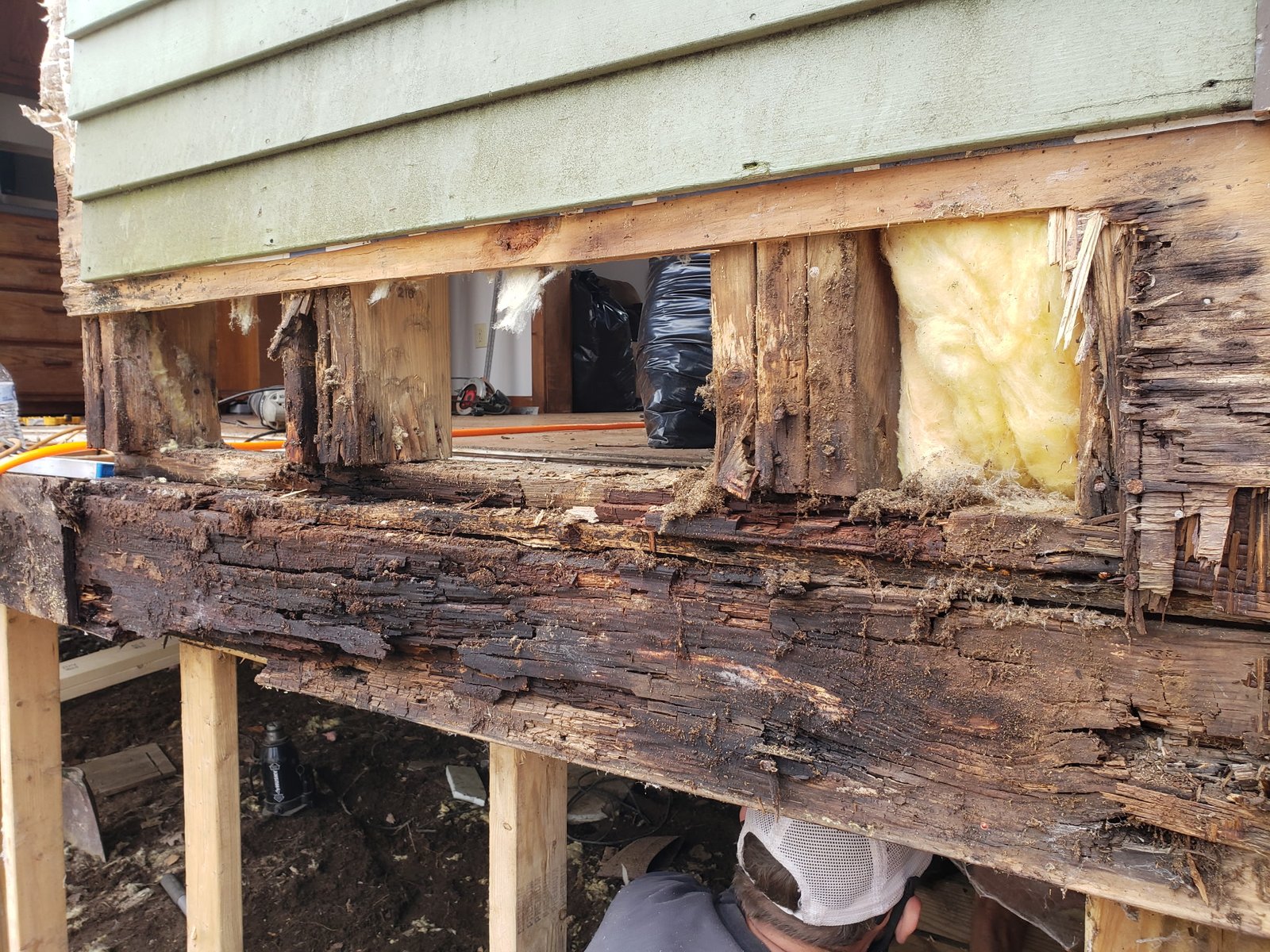
- You can see or smell rot in the framing underneath, not just the top layer.
- The shed has shifted, tilted, or feels unlevel along with the soft floor.
- There are signs of termites or carpenter ants in the structure.
The thing that turns a simple floor repair into an expert job is what’s under the floor. Surface panels are cheap and easy. Joists and the foundation they sit on are neither, and getting them wrong means the new floor you just paid for starts failing on the same schedule as the old one. A professional can pull back a section, see how far the damage actually runs, and tell you whether you’re replacing a panel or addressing the framing and drainage that caused it.
The honest takeaway
A soft floor is rarely just a soft floor. It’s water that found a way in and stayed. The fix is usually straightforward if you catch it while it’s still one spot, and it gets expensive once it reaches the joists. If you’re poking at a spongy section and wondering how deep it goes, that’s the moment to get a real look at it rather than walking around it for another year.