A little dip in a shed roof is easy to ignore. It sat fine for years, so what’s the harm in another season? The harm is that a sagging roof is almost never the actual problem. It’s the symptom. Something underneath is giving way, and the sag is just the part you can see from the yard.
Here’s what’s usually going on, and how to tell the difference between a quick fix and a structural issue worth a phone call.
What’s actually happening up there
A shed roof holds itself up through a fairly simple system: rafters or trusses carry the load down to the walls, and the walls carry it to the foundation. When you see a sag, one of those parts is no longer doing its job. The common culprits are:
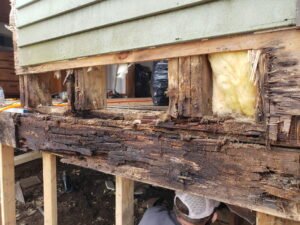
Water damage. This is the big one. A small leak you never noticed soaks into the sheathing and the rafters over time. Wet wood loses its strength and starts to bow under the same weight it used to handle fine. By the time the roofline dips, the rot has usually been working for a while.
Too much weight, too often. Heavy snow loads, a second layer of shingles added over the first, or even a few years of wet leaves piling up in a valley can push a roof past what it was built for. Sheds are rarely engineered with much margin to spare.
A failed truss or rafter connection. Older sheds were often nailed together quickly. Nails back out, gusset plates loosen, and a single weak joint can let the whole assembly settle.
The walls spreading. If the shed walls are bowing outward at the top, the roof drops in the middle to follow them. That points to a foundation or framing problem, not a roof problem.
What you can probably handle yourself
If the sag is minor, the wood underneath is dry and solid, and the cause was something obvious you’ve already fixed (you cleared two feet of wet leaves off the roof, say), you may be looking at a cosmetic situation. Clearing the load, sealing a small leak, and keeping an eye on it is reasonable. Replacing a few shingles or adding a bit of flashing where water was getting in is a normal weekend job for a handy owner.
When to call an expert
Stop and make the call if any of these are true:
- The roof sheathing feels soft or spongy when you press on it, which means rot has set in.
- You can see daylight through the roof, or there’s active dripping inside.
- A rafter or truss is visibly cracked, split, or pulling away from the wall.
- The walls are leaning or bowing outward.
- The sag is getting worse season over season.
The reason to bring someone in here isn’t just the repair itself. It’s that a compromised roof structure is a safety issue. A shed roof that lets go can do it all at once, usually with whatever you’ve got stored underneath it. A professional can tell you whether you’re looking at sistering a couple of rafters, replacing rotted sheathing, or a more involved rebuild, and give you a straight answer on what it costs before anything starts.
The honest takeaway
Most sagging roofs are fixable, and many are cheaper to address than people expect, precisely because catching it early keeps a small repair from becoming a rebuild. The mistake is waiting until the next big storm decides the timeline for you. If you’re not sure which side of the line your roof is on, that uncertainty is itself a good reason to have someone take a look.